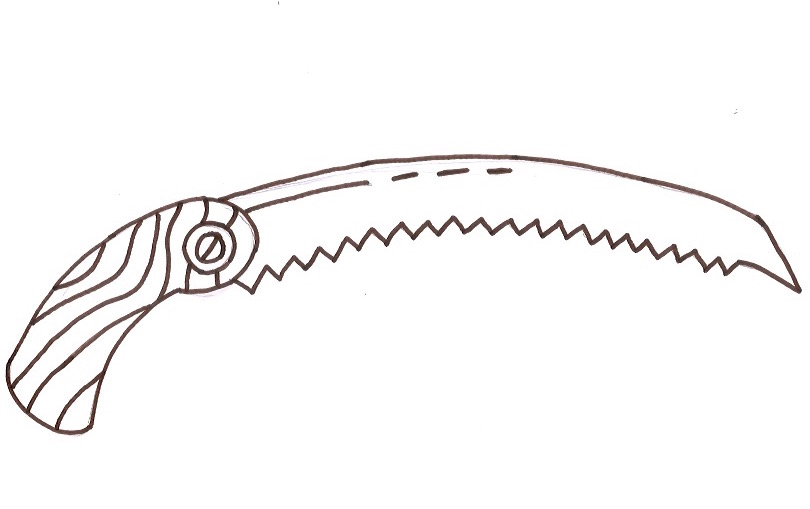
Yesterday I was day dreaming at the top of a big-tooth aspen removal, more or less ruminating on the definition of the urban forest. Without a quick google search or anything like that, I had arrived at this notion that it’s essence must certainly reside in the overlap of people and trees. This varies in the sense that in some places there are more people and in some places there are more trees, but the urban forest requires both in the most basic sense. Without people, it’s just a forest, and vice versa.
Even a lone tree growing from the tree pit on a tree lawn can be a microcosm of the larger machine of nature, no matter how you slice it, and therefore there is an undeniable wild quality to even the most urban of forests that really draws many arborists into the profession. Arborists are vagabonds. Maybe that’s anecdotal (I’m thinking of a very particular sample set that I know well), but I believe it to be true. Vagabonds yearn for adventure, obviously. Therefore, the urban forest is, to get back to this desire to define it, perhaps unmapped territory, where a certain level of adventure awaits.
Furthermore, trees in the urban forest need to be worked on. This fact is inescapable, and it brings arborists painfully close to the natural world.
In the top third of the crown of the aspen tree, I snapped back to reality. I had come across a very large cavity. There was a callused-over torsion crack and two old branch collars above and below the seam that looked like the apertures in bird houses. Naturally, they were entrances to the home inside of the tree, more commonly called habitat. Here I was knocking loudly. In the lower entrance there were remanences of an old beehive, which gave me pause. Surely by now (after all this ruckus) I would’ve seen the bees if they were there. Still, I wondered about the integrity of the decay column I was tied to. It could hold wildlife, but could it hold me?
I called down for a throw line after sounding the cavity. It clunked when my gaffs bounced against it, just before punching through the outer shell of the stem. I decided to set a second rope behind me in a nearby silver maple tree before climbing another fifteen feet above the hollow to fell the tops. Aside from the ropes and the gear, this type of prognostication might be my most valuable tool. It certainly offers the most comfort.
I proceeded to fell the tops of the aspen into the hole to the lawn below, rolling them down the side of a Norway Spruce tree that was growing next to the aspen. The sweeping, flexible branches of the spruce added drag to the falling tops and slowed them down, which was a quicker solution in this scenario than setting up a rigging system, although it certainly qualifies as a type of rigging plan, per se. I think I heard it first from Tony Tresselt in a training years ago, “keep it simple, stupid.” It’s funny how that stuff stays with you, materializing more often than you think.
I was eventually working my way through the monotony of snap cutting blocks of wood off the stem to shorten it up before felling, when I arrived again at roughly the middle part of the hollow. I made my mismatched cut, and on my undercut I noticed a gray and brown mottled fur poking out of my saw kerf. Fly tiers call this dubbing. I turned over the power head in my hand and noticed that it was also clumping up on the underside of my saw at the chain guard, mixed with fine brown dust from whatever heartwood remained, slightly damp.
I pushed the piece off and to my horror I was looking at what I had suspected after seeing the fur spilling from the kerf: I had cut a squirrel in half. Two clawed feet stuck up in the air. The rest of the mess was unbearable to look at, but its the pink feet that I couldn’t help focusing on. Luckily, one squirrel narrowly avoided the saw (imagine the horror), and it jumped from the tumbling block of aspen following my next cut, splaying out like a skydiver. Both the squirrel and the block landed flat, which is to say nothing of skill, I guess. The luckier squirrel bailed downhill into the brambles.
As a tree climber who has spent the better part of 16 years weaving through the urban forest, I can say at the very least that there is hardly a dull day.





Recent Comments